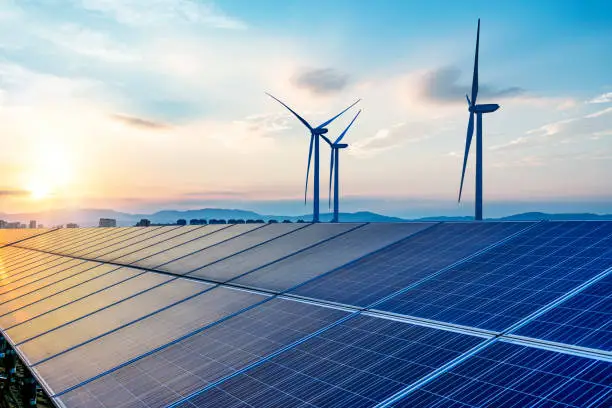
China’s green energy manufacturing sector is undergoing one of the most significant expansions in modern industrial history. With global demand for clean technologies rising at an unprecedented pace, China is scaling its production capacity across solar PV modules, electric vehicle batteries, energy storage systems, and hydrogen technologies. This expansion has positioned the country as the backbone of the world’s clean‑tech supply chain.
Solar energy remains China’s strongest pillar. The country currently produces more than 80 percent of the world’s solar panels, and new investments aim to increase both efficiency and capacity. Advanced manufacturing hubs in Jiangsu, Anhui, and Sichuan are adopting next‑generation technologies, including heterojunction and perovskite modules, which offer higher performance and lower production costs. These innovations are critical as global markets shift toward more efficient solar solutions.
China’s electric vehicle (EV) battery industry is expanding even faster. Home to the world’s largest EV market, China has built an interconnected ecosystem of battery manufacturers, raw material suppliers, and recycling facilities. Companies such as CATL and BYD are scaling production of lithium‑iron‑phosphate (LFP) and nickel‑manganese‑cobalt (NMC) batteries to meet domestic and international demand. New gigafactories under construction will significantly boost capacity, supporting EV deployments in Asia, Europe, and Latin America.
Hydrogen technology is emerging as China’s next clean‑tech frontier. Provincial governments are investing in hydrogen refuelling stations, electrolyser manufacturing, and pilot projects for industrial decarbonisation. These investments aim to support China’s long‑term goal of achieving carbon neutrality by 2060, while strengthening global leadership in alternative energy systems.
Industrial policy continues to play a central role. Beijing’s manufacturing roadmap emphasises innovation, scaling, and export competitiveness. The focus on vertical integration—combining mining, refining, manufacturing, and recycling—gives China a strategic advantage in cost structure and supply security. This integration allows Chinese firms to withstand fluctuations in global commodity markets and maintain stable production.
Despite its dominance, China’s clean‑tech sector faces challenges. Trade tensions, anti‑subsidy investigations, and supply‑chain scrutiny have intensified in Europe and the US. In response, Chinese companies are accelerating overseas investments, building factories in Southeast Asia, the Middle East, and South America. These moves aim to bypass trade barriers, diversify markets, and strengthen global partnerships.
China’s continued rise in green energy manufacturing underscores the country’s long‑term commitment to becoming a global leader in the low‑carbon economy. As nations accelerate energy transitions, China’s scale, innovation, and cost efficiency will remain indispensable to global clean‑energy deployment.