
Editor’s Note: In an age where science is redefining life itself, the questions we ask have become as profound as the answers we seek: What does it mean to create life? Can longevity be engineered? Where must humanity draw the line between innovation and ethics?
As a journalism-led platform for thought, advocacy, trade, and diplomacy, AfroAsian News has curated a dialogue series. This is the first part.
Dr. Panos Zavos, a pioneer in male reproductive science, reflects on life, longevity, cloning, and the evolving frontiers of reproductive science.
The Man & The Mission
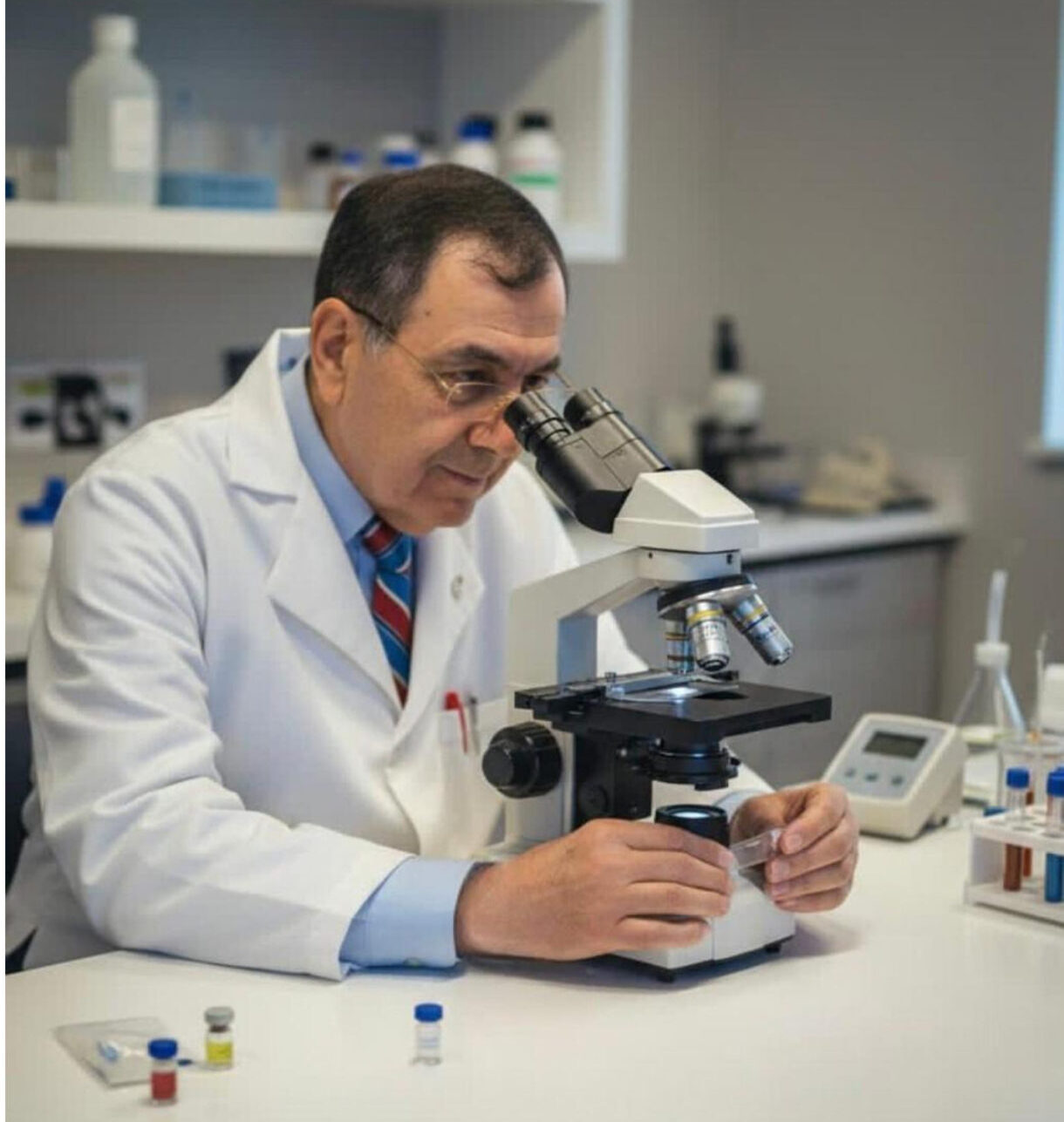
Dr. Panos Zavos in a clinical laboratory setting
Q1. Professor Panos Zavos, you are often referred to as the “Father of Andrology.” What inspired your lifelong journey into male reproductive health?
Reproductive medicine has always inspired me. It is a fascinating field—one that enables us to help a human being become a parent.
All species are born, grow, reproduce, and ultimately pass on. To assist in that process is to participate in one of the most fundamental aspects of life itself.
I have always believed that reproduction is not just a biological function, but a fundamental human right—indeed, part of our destiny.
That conviction defined my path. It led me to andrology, with a clear focus on male reproductive health—an area that represents nearly half of humanity.
“Reproduction is not just a biological function, but a fundamental human right—indeed, part of our destiny.”
Q2. Over your decades of work, what has been the most defining breakthrough or moment in your career?
It is difficult, after 47 years in this field, to identify any single defining breakthrough or moment. There have been too many to count.
However, my work on human cloning stands out as particularly inspiring—both to me and to the wider world.
The central theme of my life’s work has been assisting human beings to become parents, driven by the belief that we are destined to reproduce and complete our life cycle. Anything that could enhance that possibility became, in its own way, a milestone.
What sets my work apart is the breadth of my research across species—from fish, mice, and rats to elephants. Each of these biological models offered insights into how life reproduces, sustains itself, and perpetuates its existence.
Ultimately, it is this universal truth—that all species are driven to reproduce and pass on—that has fueled my innovation, shaped my thinking, and inspired the work I continue to do.
Q3. How do you see the evolution of andrology from a niche discipline to a global medical priority today?
Andrology is, by definition, the study of male infertility and the broader deficiencies associated with male reproduction.
Over time, the field has evolved significantly. In its early days, the question was simple: does the man have a problem?
There was a widespread belief that men were inherently “perfect” in reproductive terms. I was among the first to challenge that assumption—often asking: how can any human being be beyond question in terms of effectiveness or efficiency?
As we looked more closely at the male role in reproduction, it became clear that men are equally responsible for inefficiencies in the process.
This realization helped shift the burden that had long been placed almost entirely on women.
Throughout my career, I have emphasized the importance of evaluating both partners—simultaneously—when they seek help from an infertility specialist.
In many ways, that shift has been central to the evolution of andrology into a global medical priority.
THE SCIENCE OF FERTILITY
Q4. Male infertility remains under-discussed globally. What are the biggest misconceptions people still carry?
Male infertility remains under-discussed globally because societies often find it difficult to scrutinise the male.
For a variety of cultural and social reasons, men are frequently perceived as inherently “perfect,” making that assumption hard to question.
As we know, in many parts of the world, this remains very much a man’s world.
Q5. You have emphasized sperm DNA integrity as a key factor—how critical is this in today’s fertility challenges?
DNA integrity is indeed a very important factor.
Environmental exposures, toxicity, and increasing levels of stress contribute to the breakdown of the DNA molecule, which is the basis of every cell.
This is especially important in the reproductive arena, where DNA plays a critical role when chromosomes from the male and female unite to create a human entity.
We are finding that DNA fragmentation is becoming an issue in both the male and the female.
Therefore, DNA fragmentation testing is now emphasized as a critical aspect of evaluating the male in the diagnosis and treatment of male infertility.
“IVF and ICSI are powerful facilitators, but they are not the solution to every problem in reproductive medicine.”
Q6. With advancements such as IVF and ICSI, how close are we to effectively overcoming infertility?
With advancements such as in vitro fertilisation (IVF) and intracytoplasmic sperm injection (ICSI), can we say that we have solved all the problems in reproductive medicine today? The answer is no.
There is more to reproduction than creating an embryo in a petri dish or introducing a sperm into the egg through ICSI to achieve fertilization. It takes more than that to establish the proper union between the two gametes.
“IVF and ICSI are powerful facilitators, but they are not the solution to every problem in reproductive medicine.”
Q7. Can lifestyle changes meaningfully reverse infertility trends, or are we moving toward greater reliance on assisted technologies?
Can lifestyle changes meaningfully reverse infertility? The answer is a definite yes.
Socioeconomic conditions vary widely across countries and continents, and infertility presents differently as a result—from the Middle East to the Far East, to America and South America, across diverse cultures and belief systems.
These differences shape how infertility is understood and addressed—not only culturally and economically, but also in terms of lifestyle.
A healthy lifestyle is essential. Without it, individuals are far more likely to face infertility challenges.
Lifestyle is fundamental—to longevity, health, happiness, and fertility. Mother Nature has designed us in such a way that healthy individuals are more likely to reproduce and yield healthy offspring. This holds true across all species.
Q8. You have been at the center of global debates on human cloning. Where do you stand today on its ethical and scientific future?
I have been at the center of many debates concerning ethics, particularly in relation to cloning and other technologies used in treating male and female infertility.
When I entered the field of human cloning, I was quite determined to pursue it. I remain determined, although the world was not ready for it 20 years ago.
Today, however, the technology has developed in such a way that it can produce safer and more reliable outcomes.
Q9. Should science have limits when it comes to creating life?
Should science have limits when it comes to creating life? The answer is yes.
“Not everyone should be able to create life. We must understand what life is all about and approach it with respect and purpose.”
Q10. What safeguards should global institutions establish in the field of reproductive technologies?
We cannot create life just to destroy it. We must create life to improve the world.
Therefore, global safeguards must be established—strict guidelines grounded in ethics, morality, and respect. Without these, anyone could enter the field and misuse it.
This is not what I have done for the last 47 years, and it is not what I intend to do in the future.
“Not everyone should be able to create life. We must understand what life is all about and approach it with respect and purpose.”
GLOBAL PERSPECTIVES AND POLICY
Q11. Many nations face declining birth rates while others face overpopulation. How do you interpret this paradox?
As I travel across the world, I see very different approaches to reproductive medicine—what we say in America, “different folks try different approaches.”
I often describe infertility as a “rich people’s disease,” a point that is not always fully understood. The reality is that treatment requires financial resources, and in many cases, it has become a luxury.
Raising children today is expensive, and unless individuals have both the means and the desire, it becomes a very different issue.
Governments must consider how populations are managed and how reproductive care is supported.
For example, in Turkey, the government supports one IVF cycle per family—something that differs significantly from many other countries.
Reproductive medicine is closely tied to ethics, economics, and policy, making it a complex global issue.
Q12. How do you view India’s growing role in reproductive medicine and healthcare innovation?
India and other emerging markets are becoming increasingly important in the field of reproductive medicine.
I have visited India many times, lectured there, and collaborated with several groups.
They have advanced technologies and offer strong medical services. However, differences in standards, culture, and socioeconomic conditions can make collaboration complex.
Q13. What opportunities exist for collaboration between the United States, Asia, and Africa in fertility science?
Opportunities for collaboration between the United States, Asia, and Africa are significant. However, they require diplomacy, mutual understanding, and respect for cultural differences.
INNOVATION IN THE FUTURE
Q14. What emerging technologies excite you most?
This is one of the most important aspects of my life. I have always looked toward the future, working to develop new technologies and modalities to advance reproductive medicine.
I am particularly excited about artificial intelligence and its role in the field.
Through initiatives such as ReLive Global, we are exploring ways to rejuvenate human tissues and organs, starting at the gonadal level—meaning the testes and ovaries.
By restoring function at this level, we believe we can improve reproductive potential and potentially reverse aspects of aging.
Q15. Do you see artificial intelligence, stem cell research, or regenerative medicine transforming fertility treatments?
Artificial intelligence will play a significant role in improving efficiency, understanding, and outcomes in reproductive medicine.
It enables predictive health interventions through genomic and protein-based blood testing, offering new insights for early and targeted therapies.
AI-connected diagnostic imaging integrates modalities such as ultrasound, functional MRI, and light-based imaging to provide a more precise assessment of organ health.
Another important development is digital twin modelling, where AI creates individualized biological models to personalize treatments and enhance both mental and physical health potential.
AI is also improving clinical efficiency, contributing to better understanding and higher success rates in reproductive outcomes.
In addition, through initiatives such as ReLive Global, AI-driven approaches are being developed to rejuvenate human tissues and organs, beginning at the gonadal level, with the broader goal of improving reproductive function and addressing aspects of aging.
“We are exploring ways to rejuvenate human tissues and organs… with the broader goal of improving reproductive function and addressing aspects of aging.”
THE HUMAN DIMENSION
Q16. After decades of working with couples, what have you learned about the emotional and psychological dimensions of infertility? What message would you like to share with couples silently struggling with fertility challenges?
After working for nearly half a century in reproductive medicine, I have gained a deep perspective on life.
Reproduction is a fundamental part of the human lifecycle. When individuals are unable to have children, it can be devastating.
My advice is simple: address infertility as early as possible. Do not postpone it. Time is not on your side—the biological clock continues to move.
Also, seek the right expert. As I often say, if you have a good car, you take it to a good mechanic.
“Address infertility as early as possible. Time is not on your side—the biological clock continues to move.”
LEGACY & THE FUTURE
Q18. What is your vision for the Andrology Institute of America?
I envision a future where the Andrology Institute of America expands globally, reaching people everywhere and emphasizing the importance of the male in reproduction.
Because at the end of the day, it takes two to create life.
Q19. What legacy do you hope to leave behind?
Legacy is not what drives me—vision does. Without vision, there is no legacy.
I am known as the “Father of Andrology,” and that comes with responsibility. I embrace that fully.