BUILDING PRODUCTIVE CAPACITY
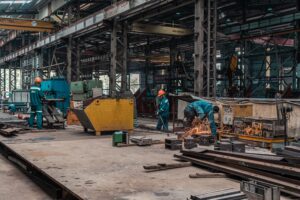
Industrial manufacturing is becoming central to Africa’s next phase of economic development.
As global conflicts disrupt supply chains and African economies move beyond exporting raw materials, India and Africa are finding that their development journeys are beginning to converge. The next chapter in the relationship may not be written in trade statistics alone, but in the productive capacity they build together.
World Changes, Development Models Too
The biggest change taking place in the global economy today is not simply who trades with whom.
It is who is learning to produce what.
Across the world, governments are beginning to view productive capacity—not trade alone—as the foundation of economic resilience.
Wars are disrupting maritime routes. Protectionism is reshaping global commerce. Supply chains that once appeared permanent are being redrawn by geopolitics, national security and industrial policy.
For years, economic success was measured by expanding trade, attracting investment and integrating into global markets.
Increasingly, however, a different question is beginning to dominate policy discussions: Who has the capacity to produce?
It is against this backdrop that India and Africa deserve to be viewed differently.
For decades, the relationship between the two has largely been discussed through diplomacy, development cooperation and steadily rising bilateral trade.
Those pillars remain important. But they no longer explain the larger transformation now unfolding.
African governments are rethinking how their natural resources should contribute to economic development.
At almost the same time, India is reshaping its own development strategy around resilient manufacturing, diversified supply chains and trusted industrial partnerships.
These conversations began independently. Today, they are beginning to converge.
India and Africa are independently redesigning their development models.
For the first time in decades, those models are beginning to complement one another. That convergence could prove to be one of the most important economic stories of the coming decade.
Convergence of Independent Transitions
Across Africa, governments are beginning to ask a different question.
Instead of simply exporting crude oil, minerals and agricultural commodities, how can more value be created before those resources leave the continent?
That question is reshaping industrial policy in countries such as Ghana, Tanzania, Côte d’Ivoire, Angola, Namibia and the Republic of Congo.
Manufacturing, beneficiation, local value addition and domestic job creation are steadily replacing the older model that depended largely on exporting raw materials.
India’s questions are different, but they are leading in a remarkably similar direction.
The disruptions caused by the pandemic, geopolitical tensions and increasingly fragmented supply chains have reinforced the importance of resilient manufacturing, diversified sourcing and trusted industrial partnerships.
Neither Africa nor India began these journeys because of the other.
Africa’s industrial ambitions have grown out of its own development priorities.
India’s search for resilient production networks has been shaped by its own economic and geopolitical realities.
Yet those two journeys are now beginning to meet.
Africa is looking for partners that can help build industries rather than simply purchase resources.
India is looking for partners that can strengthen resilient production networks rather than merely expand export markets.
For perhaps the first time in decades, these ambitions are becoming complementary rather than parallel.
Global Turmoil And Accelerated Opportunity
The convergence between India and Africa did not emerge because of global instability. It has been accelerated by it.
The conflict involving Iran, disruptions around the Strait of Hormuz and the Bab-el-Mandeb Strait, together with changing American tariff policies and supply-chain realignments, have reinforced the need for countries to rethink how and where they build productive capacity.
Economic resilience can no longer depend solely on access to distant markets. It increasingly depends on building productive capacity closer to home and with trusted partners.
Why This Moment Matters
This convergence did not happen overnight.
A decade ago, many African economies were still in the early stages of developing industrial policies centred on local value addition and manufacturing.
India, too, was at a different stage of its manufacturing journey, while global supply chains were still largely seen as efficient and dependable.
The disruptions of recent years have changed that equation.
As Africa accelerates its industrial ambitions and India strengthens its search for resilient production networks, developments that once evolved separately are beginning to reinforce one another.
That is what makes the present moment different.
Preparing the Ground
Economic partnerships of this scale are rarely created overnight. They are preceded by years of political engagement and trust.
Prime Minister Narendra Modi’s engagement with African countries, India’s emphasis on development partnerships, capacity building, digital cooperation and healthcare collaboration have helped lay the political foundations for a different kind of economic relationship.
India’s diplomatic approach has consistently emphasised partnership, mutual benefit, technology sharing and capacity building.
This increasingly aligns with the aspirations of African countries that are seeking industrialisation rather than remaining exporters of raw materials.
Diplomacy, however, is only the beginning. It can open doors, build trust and create political goodwill.
The next challenge is to translate that goodwill into industrial partnerships that create manufacturing capacity, generate employment and add value on both sides of the Indian Ocean.
Trade Alone No Longer Enough
India–Africa bilateral trade reached approximately US$93.69 billion in FY 2025–26, reflecting the growing importance of the relationship. Yet the composition of that trade tells an equally important story.
India’s exports to Africa continue to be dominated by refined petroleum products, pharmaceuticals, engineering goods, vehicles and other manufactured products.
Africa’s exports to India remain concentrated in crude oil, gold, diamonds, coal, manganese, critical minerals and agricultural commodities.
This pattern reflects yesterday’s economic relationship rather than tomorrow’s. Rising trade volumes alone cannot become the measure of success if much of the value addition continues to occur outside the continent supplying the resources.
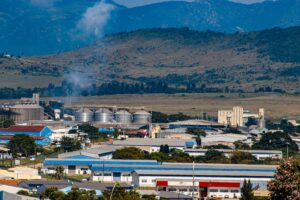
Industrial parks and manufacturing clusters are reshaping Africa’s productive capacity.
Industrial Shift, New Opportunities
Across Africa, industrial policy is undergoing a noticeable shift. Governments are increasingly encouraging beneficiation, local processing, manufacturing, industrial parks, special economic zones and domestic value addition.
Rather than asking who will buy their raw materials, many African economies are beginning to ask who will help build industries around those resources.
This creates a different kind of opportunity for India—one based not simply on trade but on industrial partnership.
Building Productive Capacity Together
The opportunities that are emerging between India and Africa are not confined to a single sector.
They span the entire spectrum of industrial development, from critical minerals and manufacturing to healthcare and digital infrastructure.
Critical minerals are one example. Instead of a relationship centred only on extraction and exports, both sides have an opportunity to develop processing, refining and downstream manufacturing.
Pharmaceuticals represent another area of convergence. India has developed globally recognised manufacturing capabilities while many African countries are seeking greater local production to strengthen health security.
Medical devices present a similar opportunity. Building manufacturing partnerships within Africa can improve access, create skilled employment and reduce dependence on imports.
These sectors demonstrate that the next phase of the relationship is likely to be defined less by buying and selling than by producing together.
Regional Markets, Not Fragmented ones
The African Continental Free Trade Area (AfCFTA) and regional groupings such as the Southern African Customs Union (SACU) make this transition more commercially viable.
Instead of approaching Africa as dozens of separate markets, Indian companies increasingly have the opportunity to build manufacturing and assembly hubs that can serve integrated regional markets.
This strengthens business viability while supporting Africa’s own industrial ambitions.
DPI as an Industrial Enabler
India’s Digital Public Infrastructure adds another dimension to this partnership.
Digital identity, payments and interoperable public platforms are no longer merely technology exports.
They provide the institutional infrastructure that allows manufacturing, logistics, finance and trade ecosystems to function more efficiently.
In that sense, digital cooperation supports productive capacity just as surely as physical infrastructure does.
India’s Partnership Model
India’s engagement with Africa has traditionally differed in emphasis from relationships centred primarily on resource extraction or market access.
Through development partnerships, capacity building, training, healthcare cooperation, digital public infrastructure and technology transfer, New Delhi has consistently projected a model based on mutual benefit.
That approach increasingly complements the aspirations of African governments.
As countries seek industrialisation, value addition and domestic manufacturing, partnerships that strengthen local capabilities become more relevant than relationships built solely around the movement of commodities.
From Trade to Shared Productive Capacity
The next phase of India–Africa relations will not be measured only by larger trade figures. It will be measured by the productive capacity both sides create together.
Joint ventures in critical minerals, pharmaceutical manufacturing, medical devices, engineering industries, renewable energy, agro-processing and digital infrastructure can create value on both sides of the Indian Ocean.
Such partnerships have the potential to generate employment, transfer technology and build resilient supply chains capable of withstanding future geopolitical disruptions.
The opportunity is therefore larger than commerce. It is about creating industrial capability.
The Road Ahead
China and the European Union remain far larger commercial partners for Africa. India’s objective, however, need not be to replicate their models or simply compete on trade volumes.
Its comparative advantage lies in building long-term partnerships that combine manufacturing, skills, technology, entrepreneurship and institution building.
If matched with Africa’s growing determination to industrialise, this can create a more balanced and durable economic relationship.
Conclusion
For decades, India–Africa relations have been discussed through the language of diplomacy, development cooperation and trade. Those foundations remain important, but they are no longer sufficient to explain the changes now taking place.
India is seeking resilient production networks, trusted partners and greater productive capacity.
Africa is seeking industrialisation, value addition and greater ownership of its economic future.
These transitions have emerged independently, yet today they are beginning to complement one another.
The significance of this moment therefore lies not simply in higher trade volumes or new investment announcements. It lies in the possibility of building productive capacity together.
If governments, businesses and institutions can seize this opportunity, the India–Africa relationship may, in the years ahead, be remembered less for the growth of bilateral trade than for the industries the two regions chose to build together.
That would mark not simply the next phase of India–Africa relations, but the beginning of a more balanced partnership built on productive capacity, shared growth and mutual benefit.
That would represent not merely an expansion of trade, but the beginning of a new chapter in South-South economic cooperation—one rooted in shared industrial capability, mutual benefit and long-term resilience.