Why a corridor now
For years, talk of an “India–China–Russia corridor” sounded more like geopolitics than commerce. On the ground, however, a quieter build-out is underway: container terminals expanding capacity on India’s west coast, dry ports in Central Asia, faster customs lanes, and a parallel financial plumbing experimenting with local-currency settlement. The logic is transactional: shippers want multiple routes as insurance against chokepoints; financiers seek lower FX risk; and all three economies want to derisk growth from single-market dependence.
The logistics backbone
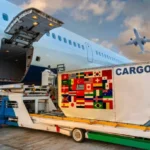
The corridor’s backbone is less one train and more a quilt of links. India’s western ports (Mundra, Nhava Sheva) handle rising volumes feeding Gulf and Red Sea hops. From Russia’s side, Arctic shipments to Asia are seasonal, but rail to the Pacific and feeder lines via Central Asia provide optionality. China’s role mixes overland links into Central Asia with port equity across the Indian Ocean. The emphasis is on reliability over spectacle: better warehousing, temperature-controlled containers, and digitized bills of lading reduce delays by days, not hours.
Payments without drama
A second spine is financial. Local-currency experiments — rupee-ruble pilots, yuan-based settlements for energy and parts — are growing alongside traditional dollar trades, creating redundancy. Banks and fintechs are building rails for smaller consignments (SMEs, spare-parts, after-sales services) that once struggled with costly compliance. For exporters, shaving a percentage point off FX costs can be the difference between a viable order and a pass.
What moves on the corridor
Energy and commodities anchor the early mix, but the growth edge is in machinery, auto components, chemicals, and industrial software services. India’s MSMEs are discovering repeat business in spare-parts and repair contracts; Chinese and Indian makers bid for the same mid-tech niches, sometimes competing, sometimes cooperating. Russian producers, constrained in the West, are courting Asian buyers with flexible terms and service bundles.
Frictions and risk controls
Customs interoperability is still patchy, transport insurance premiums remain elevated on some legs, and compliance varies by lane. For Indian firms, dual-sourcing of inputs and parallel banking routes are now standard practice. The corridor favors operators with documentation discipline, visibility tools, and patience to scale gradually.
Sectoral impacts (India lens)
Logistics/ports: steady throughput gains; Banking/fintech: cross-border payments products; Auto/chemicals: deeper supplier ties; IT services: industrial software and data pipelines; MSMEs: repeat orders and after-sales revenues. Education and skill pipelines follow as firms train for multimodal trade ops and trade finance.
Winners
- Indian port operators, rail integrators, and multimodal logistics firms that can guarantee reliability over showy speed.
- Banks/fintechs offering low-friction local-currency rails, escrow, and SME-friendly compliance.
- MSME exporters in components, tools, chemicals, and after-sales contracts (predictable margins + repeat orders).
Losers
- Single-market specialists reliant on one route or one currency who cannot absorb delays or FX swings.
- High-overhead traders without documentation discipline or visibility tooling.