
PASSAGEWAYS: Travel in Flux | Part 1
Editor’s Note
The global tourism industry is witnessing a major transition. Geopolitical tensions, shifting mobility and higher traveller expectations are changing the way the world travels. Countries across Asia and beyond are repositioning themselves in search of new tourism opportunities, travellers and investment. Will this new phase rejuvenate the industry or lead to stagnation? India’s tourism industry too is passing through a transformation with culture, commerce, connectivity and consciousness intersecting. Where does India position itself in this context
AfroAsian News will examine these changes from both sides of the journey — the traveller experience and tourism economics. The first part, PASSAGEWAYS: Travel in Flux, brings the perspective of an industry peer who has witnessed and shaped this evolution closely.
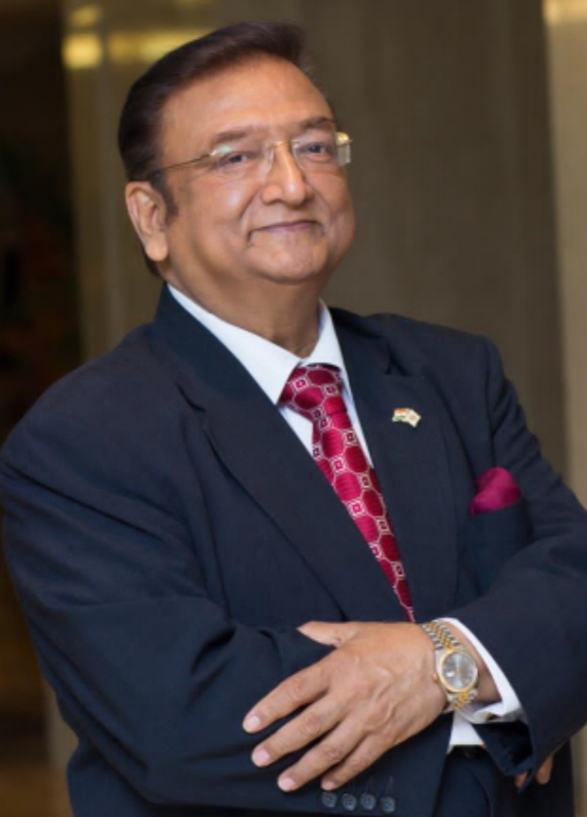
Renu Malhotra speaks to Subhash Goyal, Founder Chairman of STIC Travel Group, one of the best-known figures in India’s tourism and aviation industry, on the changing dynamics of global tourism, India’s opportunity, evolving visitor experience, aviation, soft power and the future of meaningful mobility.
Origins & Vision
When you founded STIC Travel Group in 1973, India’s tourism sector was still in its formative years. What vision inspired you then?
I started a dreamer, born of lofty ideas and ambitious plans. I wanted to conquer the world. The travel bug was an accident of my youth. But the journey that ensued transformed the course of my life forever. What inspired me at that time was the vision of making international travel affordable and accessible for young Indians, especially students.
As a student, I wanted to travel abroad but realised that, unlike in many developed countries, there were no organisations in India helping students with low-budget travel services and information. As a Delhi University student leader, when I was invited to attend the International Student Conference in Japan in 1970, as part of the Japan World Exposition, I decided not to depend on financial support from my family or the University.
Instead, I saw it as an opportunity to create something new. I gathered a group of 15 students to travel together, allowing the 16th person to travel free. This made the journey affordable and even enabled me to earn a small commission. That experience gave me the confidence and vision to organise student travel in India. It also laid the foundation for my future in the travel industry.
India’s Tourism Moment
Having witnessed more than five decades of transformation, how do you view the evolution of India’s travel and tourism industry today?
Having witnessed more than five decades of transformation, I feel that India’s travel and tourism industry has grown tremendously and become one of the country’s most important sectors. In earlier days, travel was limited, air connectivity was poor and tourism infrastructure was not well developed.
Today, India is connected globally with modern airports, better airlines, improved highways, digital technology and world-class hotels. Domestic tourism has also increased significantly, with more Indians travelling for leisure, business, education and religious purposes.
At the same time, the industry still faces challenges such as high aviation fuel costs, lack of pilots and the need for better coordination between tourism and aviation policies. Overall, the progress has been remarkable and with proper planning and support, India has the potential to become one of the leading tourism destinations in the world.
Tourism, Soft Power & Economic Growth
Do you believe tourism is now becoming one of India’s strongest instruments of economic growth and global soft power?
Yes, I strongly believe that tourism has become one of India’s strongest instruments of economic growth and global soft power.
That is why I wrote the book Poverty Eradication and Economic Development through Tourism, which advocates that tourism, being a labour-intensive industry, can create employment, earn valuable foreign exchange and become an important instrument of economic growth.
Tourism not only generates employment and foreign exchange but also supports many related sectors such as aviation, hospitality, transport, handicrafts and food services. At the same time, it showcases India’s rich culture, heritage, spirituality, diversity and traditions to the world.
Today, through tourism, people across the globe are experiencing India’s history, yoga, cuisine, festivals and hospitality, which strengthens India’s image internationally and creates greater goodwill.With proper infrastructure, better connectivity and supportive policies, tourism has the potential to play an even bigger role in India’s economic development.
Civilisation, Culture & Meaningful Mobility
India possesses extraordinary civilizational depth. How can the country better position itself globally as a meaningful travel destination?
India is blessed with a unique combination of history, culture, spirituality, nature and diversity, which very few countries in the world can offer. India has always been an incredible country with many surprises and delights — from the jungles of Sunderbans to the colourful desert forts and palaces of Rajasthan, and from the sculptures and temples of Khajuraho, Hampi and Badami to the deep blue waters around the Andaman & Nicobar Islands.
From the heights of the Himalayas to its vast coastline, India is truly a haven for visitors. The country is home to 80 national parks, 441 wildlife sanctuaries, 36 world heritage sites, beautiful palaces, picturesque havelis, churches and countless cultural landmarks. India is also the birthplace of four religions — Hinduism, Buddhism, Sikhism and Jainism. Sufism, the spiritual side of Islam, also flourished here.
We have 7,000 kilometres of coastline, undiscovered beaches, mangrove forests in West Bengal, more than 400 rivers flowing across the country and thousands of ancient caves with immense cultural significance.
To position itself better globally as a meaningful destination, India must focus on improving infrastructure, cleanliness, safety, connectivity and visitor experience. At the same time, the country should promote its civilisation heritage — including ancient temples, yoga, Ayurveda, Buddhism, art, music, cuisine and festivals — in a more organised and professional manner.
India should also invest in better international marketing and digital promotion to attract visitors seeking culture, spirituality and wellness experiences. If these areas are handled properly, I am sure India can become one of the world’s most respected and sought-after tourism destinations.
The Rise of Experience-Led Tourism
Which emerging sectors do you believe will define the next phase of tourism growth — wellness tourism, experiential travel, cruise tourism, eco-tourism or spiritual tourism?
I believe the next phase of tourism growth in India will be driven by wellness tourism, experiential travel, eco-tourism and spiritual tourism. India has a natural advantage in wellness tourism because of yoga, Ayurveda, meditation and holistic healing, which continue to attract people from across the world.
Experiential travel is also growing rapidly, as tourists increasingly seek authentic local experiences, culture, food, village life and adventure rather than conventional sightseeing. Eco-tourism too is becoming increasingly important as people become more conscious about nature and sustainable mobility.
At the same time, spiritual tourism remains one of India’s strongest attractions due to its ancient temples, pilgrimage centres and spiritual traditions. Overall, these sectors can contribute significantly to India’s future tourism growth if planned and promoted properly.
Technology, AI & The New Traveller
Technology and AI are rapidly transforming global industries. How significantly are they reshaping travel and tourism?
Technology and AI are reshaping the tourism industry in a very significant way. Today, tourists can easily plan, book and manage their journeys online within minutes. AI is helping companies provide personalised suggestions, better customer service, faster bookings and instant support through chatbots and digital platforms.
Technology has also improved airline operations, hotel management, online payments and safety systems. Social media and digital marketing are influencing visitor decisions more than ever before. At the same time, AI and technology are helping tourism businesses reduce costs and improve efficiency.
However, while technology is making mobility more convenient, the human touch and personal relationships will always remain important in the tourism industry.
Today’s travellers increasingly seek experiences rather than merely destinations. How do you interpret this shift?
Today’s travellers are looking for meaningful and memorable experiences rather than simply visiting famous destinations. People now want to understand local culture, traditions, food, lifestyles and nature, while increasingly preferring unique and personal experiences over routine sightseeing.
This shift has happened because travellers are more informed, well-connected through technology and interested in learning and self-discovery. Many people now value adventure, wellness, spirituality, village tourism and interaction with local communities.
As a result, the tourism industry also needs to focus more on creating authentic and high-quality experiences instead of only promoting destinations.
Tourism Beyond Borders
Can tourism still serve as a bridge between nations in an increasingly polarized world
Yes, tourism can still play a very important role in building bridges between nations, even in an increasingly polarised world. When people travel, they learn about different cultures, traditions, lifestyles and ways of thinking, which helps create understanding and mutual respect.
Tourism encourages human connections beyond politics and borders, while promoting peace, friendship and cultural exchange. It also helps break misconceptions and brings people closer through shared experiences. In many ways, tourism remains one of the most effective ways to strengthen global harmony and people-to-people relationships.
There is a famous saying: “Borders crossed by tourists are seldom crossed by armies.”
Building India’s Tourism Ecosystem
What policy or infrastructure reforms would most accelerate India’s tourism ecosystem?
To accelerate India’s tourism ecosystem, the government should focus on improving infrastructure, connectivity, cleanliness, safety and ease of mobility. Better airports, roads, rail networks, hotels and public facilities are essential to provide a comfortable experience for both domestic and international visitors.
Simplifying visa processes, strengthening digital services and improving coordination between tourism, aviation, railways and state governments would also help significantly. India should invest more in destination development, heritage conservation and skill training for tourism professionals.
Leadership, Legacy & Meaningful Travel
As someone who built an enduring institution, what leadership values remain timeless for you?
For me, the most timeless leadership values are honesty, hard work, commitment and the ability to build trust with people. A leader must have a clear vision, while remaining grounded and willing to learn from others.
Consistency, discipline and treating people with respect are equally important in building any lasting organisation. I also believe that leadership is not only about personal success, but about creating opportunities for others and working with a sense of responsibility towards society.
Finally, what does “meaningful travel” mean to Subhash Goyal?
For me, meaningful travel is not just about visiting new places, but about learning, understanding and connecting with people and cultures. Travel should broaden the mind, create respect for different traditions and give people new experiences and perspectives.
I believe meaningful travel should leave a positive impact both on the traveller and on the destination being visited.
Decoder: The New Language of Tourism
Experiential Tourism — What travellers want
Experiential tourism is about moving beyond simply seeing a destination to experiencing it. Travellers increasingly want to understand how people live, eat, work and celebrate, rather than follow a standard sightseeing itinerary. This could mean learning to cook a local dish, staying in a village, joining a traditional festival, exploring a craft community or spending time in nature.
The experience itself can also become the attraction. Tamil Nadu is experimenting with a repurposed aircraft as a dining experience, bringing the atmosphere of air travel into the tourism experience. Similarly, Kerala’s tourism villages represent another approach, bringing visitors closer to local communities, livelihoods and rural experiences.
The shift is ultimately towards participation, discovery and personal connection. For destinations, it also creates opportunities to spread tourism beyond major attractions and generate income for local communities, artisans, farmers, guides and small businesses.
The challenge is ensuring that these experiences remain genuine rather than becoming another packaged tourism product.
Tourism Corridors: How travellers move
A tourism corridor is a connected geography of destinations and experiences that form part of one journey. It does not happen in isolation. Travellers move along routes shaped by air connectivity, roads, railways, ports, borders and visa access.
It can link several destinations around a common route, theme or geographic region. As global tourism patterns change, countries are also looking at new corridors beyond culture and heritage. They connect destinations through nature, wellness, food, adventure, coastal tourism or improved transport links. India’s Buddhist and Ramayana circuits, as well as medical tourism, are some examples.
Tourism Economy- What develops around travel
Tourism is not only about where people go or what they experience. Every traveller creates demand for a wider network of businesses, infrastructure and services — from airlines, hotels and restaurants to transport, entertainment, handicrafts and local experiences.
As tourism grows, it can also attract investment in airports, roads, accommodation, convention centres, cruise facilities and destination infrastructure. This creates employment and income across a much wider network than the tourism business itself.
The economic impact can reach local communities through artisans, farmers, guides, transport operators, food producers and small businesses. In this sense, tourism is not a single industry but an ecosystem of economic activity built around the movement of people.
The question for destinations is therefore not simply how many tourists they attract, but how much economic value their tourism creates and who captures it.