
Hydrogen beyond borders- Part 2
Editor’s Note
Hydrogen is entering a phase where project announcements are moving to the implementation stage, with Final Investment Decisions (FID) becoming an important marker of that transition.
This is the second part of Hydrogen Beyond Borders series. While the first part, Hydrogen: Why Policy Signals Are Not Translating into Projects examined why policy signals are not translating into projects, this article looks at what has to come together once a project is planned—the carriers, ports and allied infrastructure needed to move hydrogen from production to demand.
Policies may encourage planning hydrogen projects. But once announced, another question arises: how will the hydrogen reach the market? This makes transport a central part of the project.Production, offtake, and pricing may fall in place. But without scalable infrastructure to transport hydrogen across geographies in a reliable manner, projects are stalled.
This is where hydrogen as a product becomes complex.
Hydrogen does not move as gas
For all practical purposes, the product cannot be transported long distance in its gaseous form. It is converted into carrier molecules—most commonly ammonia or methanol. This is not technical, but an infrastructural issue.
The choice of carrier molecule determines the infrastructure required, the project cost, and how the hydrogen will be used. Therefore, transport is not a separate segment but is built into the project design itself.
The choice of carrier molecule determines the infrastructure required, the project cost, and how hydrogen will be used.
Role of ports
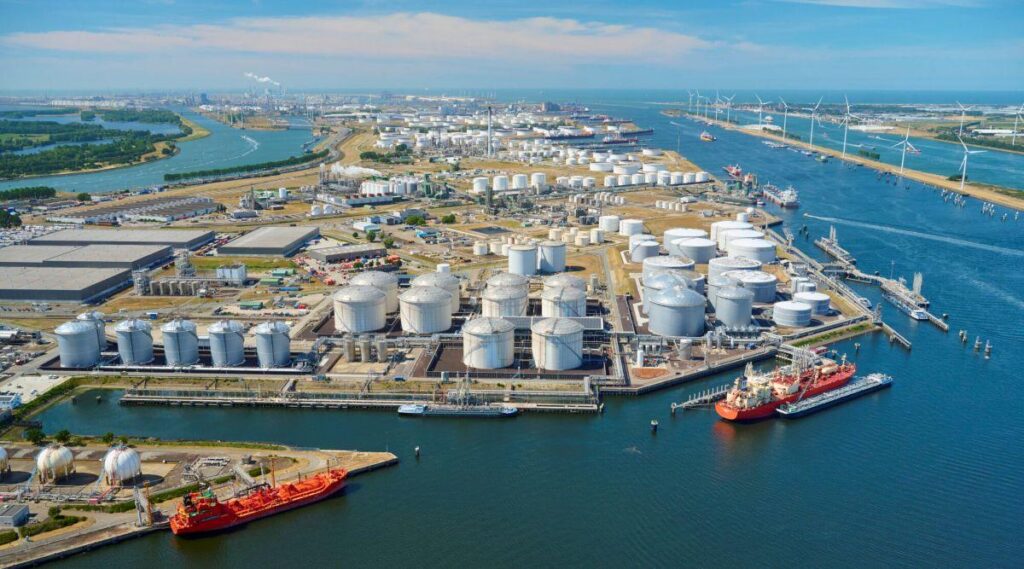
Ports become central to this system. In its converted form, hydrogen moves by sea, linking production with demand. This requires storage facilities, handling systems, export and import terminals, and connections to downstream infrastructure. Port development is therefore a prerequisite for hydrogen projects at scale. Without these facilities, hydrogen cannot be moved across borders.
Infrastructure is uneven
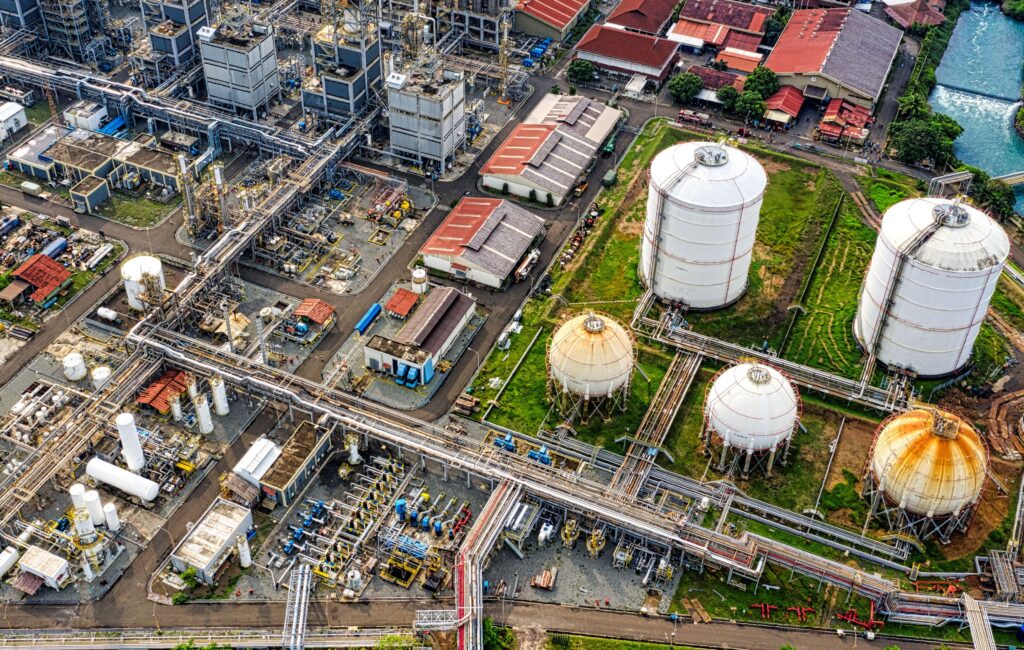
Unlike conventional energy, hydrogen infrastructure is yet to consolidate. Different regions have taken different approaches. In some cases, existing infrastructure—such as natural gas pipelines—is being repurposed. Elsewhere, entirely new infrastructure is being built, particularly where ammonia or methanol is involved. Projects must therefore take these variations into account, as standards are still evolving.
Logistics do not operate separately from production and demand. Ammonia may be used directly in some applications, or converted back to hydrogen depending on demand. Methanol has different uses, and converting it back to hydrogen involves a different process. These choices are not interchangeable. They have to be linked from production to consumption.
The challenge of scale
Allied infrastructure must grow with hydrogen projects. While small and isolated projects can be implemented as pilots, larger ones require standardised systems across multiple sectors.
If infrastructure development is lopsided, both production and consumption are affected. Delays can lead to cost overruns, while the market demand goes unmet.
Between the two lies an entire system of carriers, ports, and allied infrastructure that determines whether hydrogen can deliver
Where this leads to
Hydrogen is often discussed in terms of production and demand. But between the two lies an entire system of carriers, ports, and allied infrastructure that determines whether hydrogen can deliver.
This system is still evolving. Companies are experimenting with different methods, either building new infrastructure or adapting them and, in some cases, rethinking strategies. Transport is an important factor in the shaping of the hydrogen economy. The bulk movement of hydrogen across regions will remain uneven until the transport infrastructure keeps pace with production and demand.
DECODER | HOW HYDROGEN MOVES
The choice of carrier, the port and the supporting infrastructure each play a role in moving hydrogen from production to the market. The key is to understand the layers in the hydrogen economy
Carriers
Hydrogen is difficult to move over long distances as a gas. It can therefore be converted into other molecules, mainly ammonia or methanol, which are easier to handle and transport.
The choice of carrier affects how it is stored, moved and eventually used.
Ammonia and methanol are themselves the carriers; they do not require another carrier for transport. But each requires its own storage, handling and conversion systems. For example, ammonia can be transported and used directly in applications such as fertiliser production, while methanol has different industrial uses.
If hydrogen is required at the destination, each follows a different process for converting it back to hydrogen.
Ports
For hydrogen moving across countries by sea, ports connect production with the market.They need storage tanks, loading and unloading systems, export and import terminals, and inland connections to handle ammonia and methanol carriers.
Existing ports may therefore have to be upgraded or adapted to handle hydrogen carriers, while some projects will require new facilities.
A hydrogen port is therefore more than an existing port handling a new product. It may need facilities to receive, store, transfer and supply hydrogen carriers.
Infrastructure
Hydrogen infrastructure goes beyond ports to include pipelines, storage, terminals and last-mile connections. Interestingly, some existing oil and gas pipelines are being repurposed for hydrogen transport.
Bunkering
Bunkering is the process of supplying fuel to ships. In the hydrogen economy, ports may eventually need facilities to supply ships with hydrogen-based fuels such as ammonia or methanol.
The takeaway is simple Production alone does not create a supply. The carrier, the port and the infrastructure must move together to the buyer.