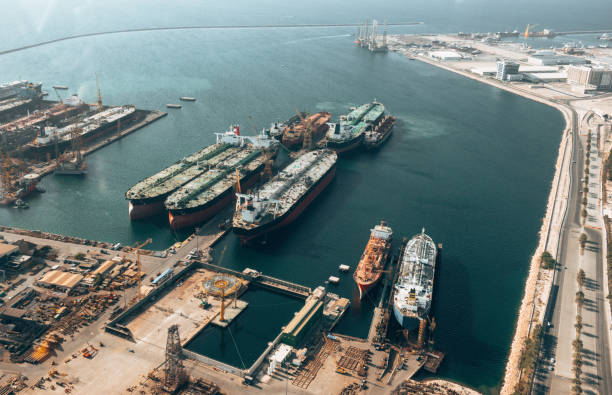
The Middle East is rapidly consolidating its position as one of the world’s most important logistics superhubs as governments and global shipping companies invest heavily in port expansions, free‑zones, and maritime corridors. With trade flows shifting toward Asia and Africa, the region is strengthening its infrastructure to capture growing demand.
The UAE remains at the forefront. Jebel Ali Port continues to expand capacity with new terminals, automation technology, and multimodal links connecting sea, air, and land transport. Abu Dhabi’s Khalifa Port is scaling its container handling capabilities, backed by investments from Asian and European logistics giants.
Saudi Arabia is accelerating development through its National Transport and Logistics Strategy. Jeddah Islamic Port, King Abdulaziz Port in Dammam, and new Red Sea hubs are undergoing major upgrades with advanced cranes, digital cargo platforms, and expanded free‑zone facilities. These investments align with the Kingdom’s goal of becoming a top global logistics centre.
Qatar, Oman, and Bahrain are also strengthening their roles. Hamad Port in Qatar is positioning itself as a transshipment hub serving both the Gulf and East Africa. Oman’s Duqm and Salalah ports are emerging as gateways for India–Africa trade corridors, benefiting from deepwater access and strategic location.
Free‑zones across the Gulf are attracting multinational manufacturers and e‑commerce companies seeking fast, tax‑efficient access to markets spanning Asia, Africa, and Europe. Digital logistics platforms, bonded warehousing, and air‑cargo integration are making the Gulf a critical artery for global supply chains.
As trade patterns evolve and supply‑chain resilience becomes a priority, the Middle East’s expanding logistics ecosystem is set to play an increasingly central role in global commerce.