
The AI Infrastructure Economy The Hidden Input Part 5
Editor’s Note
The Hidden Input in the AI Infrastructure Economy does not stop with water, power, cooling systems and land. Another one — semiconductors — is emerging as an important component. Processors, memory chips, networking components and power-management devices are part of this framework. Their availability, performance and cost influence the scale of data centre expansion.
In The Hidden Input Part 5, AfroAsian News examines this less visible side of the expansion, the chips the AI infrastructure economy needs, the supply bottlenecks and their impact on non-AI industries. The accompanying decoder, Decoding the Semiconductor Supply Chain, explains how chip design, electronic design automation, manufacturing, packaging and systems fit together.
AI infrastructure begins with silicon
A data centre is perhaps evaluated in terms of its computing capability, power requirement or floor space. But without considering the semiconductors inside its servers, the story of AI Infrastructure economy is incomplete. AI workloads need powerful computing chips to carry out large numbers of calculations, memory systems to supply data quickly, and networking components to connect processors and servers. Other chips regulate power, control signals and perform the functions needed to keep the system running.
The scale of this requirement is huge. A June 2026 report by the Semiconductor Industry Association and Deloitte found that a single AI server rack can contain more than 4,500 packaged chips. These include accelerators, central processing units, memory, networking chips and other components. The report estimated that semiconductors account for more than 95% of the value of a server rack. The report estimated that semiconductors account for more than 95% of the value of an AI server rack, indicating that it has become central to the AI infrastructure economy.
Not all chips do the same job
The term chip often brings to mind the powerful processors used to train and run AI models. Yet data centres depend on several categories of semiconductors. Accelerators perform much of the specialised computation required by AI workloads. CPUs handle general-purpose computing and coordinate tasks. Memory chips keep the data needed by processors readily accessible. Networking chips move data between servers, while power-management and other supporting chips help the system operate.
The impact of investments in AI infrastructure goes beyond building data centres. Manufacturers of laptops, smartphones and other electronic products that rely on memory chips will also feel the effect.
These chips perform different functions, but all are needed to run an AI data centre. A more powerful processor cannot deliver its full computing capacity if the memory and networking systems cannot supply and move data fast enough. Memory has become particularly important as AI workloads grow. High-bandwidth memory (HBM), used with advanced processors, moves large volumes of data quickly between memory and computing units. Its production requires specialised manufacturing and packaging processes.
The wider electronics market
The impact of investments in AI infrastructure goes beyond building data centres. Manufacturers of laptops, smartphones and other electronic products that rely on memory chips will also feel the effect.
In April 2026, Gartner forecast that global semiconductor revenue would exceed US$1.3 trillion, while predicting that demand from the AI Infrastructure Economy would trigger sharp increases in memory prices. Gartner also warned that rising memory costs could seriously hit non-AI markets.
Part of the pressure comes from manufacturers increasing production of high-value memory chips for AI servers, even as conventional electronic products continue to need DRAM and flash storage. Though these are different markets, both depend on some of the same manufacturing facilities and investment decisions.
For laptop manufacturers, for example, this means higher component costs. Other factors also contribute to the price spike, but demand from the AI infrastructure economy is putting pressure on the memory market. The implication is wider. Investment in AI infrastructure can affect the products used by people and businesses that are not directly linked to building data centres.
The supply chain behind the chips
Semiconductors are not one-factory products. They go through several processes, including chip designs, circuits and specialised software. Later, fabrication plants manufacture chips on silicon wafers. These chips are packaged and tested before systems companies integrate them into servers and other equipment.
Each stage requires specialised skills, technology, machinery and investment. An industry analysis published in July 2026 identified memory and advanced packaging as two of the constraints holding back the expansion of AI computing. Since the advanced chip manufacturing and packaging sectors are dominated by a few companies, any disruption in these facilities or a fall in production can affect supply. Shortages can lead to cost and time overrun.
India and the wider corridor
India’s semiconductor ambitions are gaining momentum. The country already has a substantial chip-design workforce and is seeking to expand its capabilities in fabrication, assembly, testing and packaging. In July 2026, the Union Cabinet approved the Semicon 2.0 policy, allocating ₹1,27,500 crore to support a wider semiconductor ecosystem. These developments place India within a global industry whose demand is being reshaped by AI.
Other Asian and African economies occupy different positions in the semiconductor supply chain. South Korea is a major producer of memory chips, including high-bandwidth memory used in AI systems, while Taiwan leads in advanced chip manufacturing. Japan is an important supplier of semiconductor manufacturing equipment and materials. Malaysia has a strong base in chip assembly, testing and packaging, while Singapore has capabilities in wafer fabrication, testing and advanced packaging. Vietnam is also expanding its role in semiconductor packaging and related operations.
It is how existing capabilities connect within the global supply chain
In Africa, Morocco has established semiconductor packaging and testing operations, while countries such as Egypt and Kenya are focusing on design, research and related activities. Africa’s overall share of the semiconductor industry remains relatively small, though some countries have acquired capabilities. For the India–Africa–Asia trade corridor, the relevant question is not whether every country can build a complete semiconductor industry. It is how existing capabilities connect within the global supply chain.
Beyond the processor
The race within the AI infrastructure economy is to secure the most powerful processors. But the expansion of computing capacity depends on semiconductor technologies and the industrial systems that produce them.
As AI data centres expand, the semiconductor supply chain will increasingly influence their cost, timing and scale. The chips inside the data centre are not simply components purchased after the infrastructure has been built. They are the inputs that determine what infrastructure can be built in the first place.
Decoding The Hidden Input
The Semiconductor Supply Chain
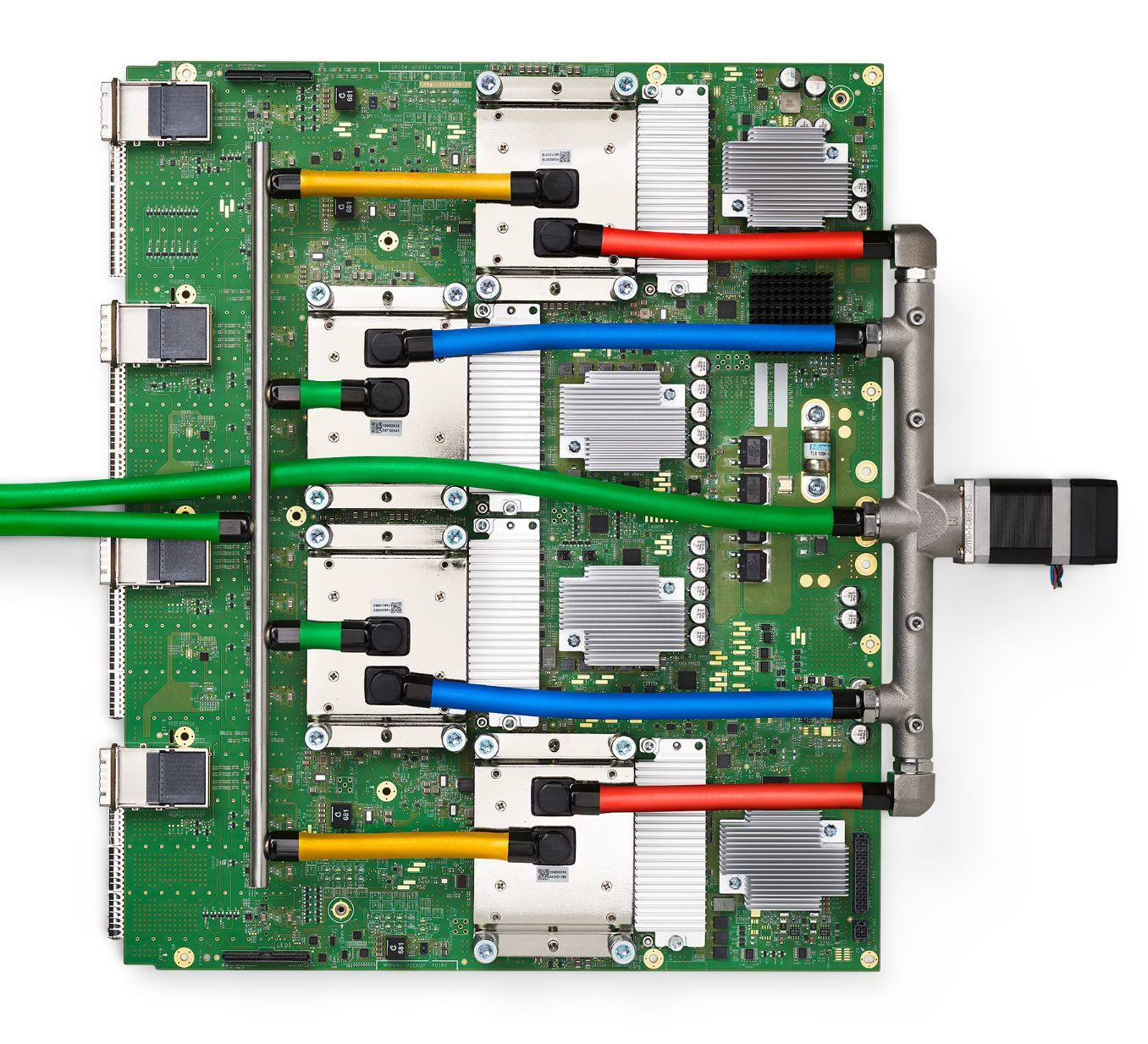
A semiconductor passes through several specialised stages before it becomes part of an AI data centre. Understanding these stages helps explain why the availability of chips is as important as the number of factories producing them.
Chip design
Companies such as Nvidia, AMD and Qualcomm design chips for particular computing tasks. This involves deciding how a processor will perform, the functions it will handle and how its different components will work together. Engineers use specialised software known as Electronic Design Automation (EDA) to develop, test and verify these increasingly complex designs before manufacturing. Companies such as Synopsys and Cadence provide these tools. In the AI infrastructure economy, chip design determines the standards that manufacturers must meet to produce processors, memory and other supporting chips.
Manufacturing
Foundries manufacture chips on silicon wafers using highly specialised equipment and processes. A silicon wafer is a thin, flat disc of highly purified silicon. Manufacturers create thousands of tiny electronic circuits on its surface. The process also requires specialised materials such as high-purity chemicals, gases and photoresists.
Building fabrication capacity requires substantial investment, technical expertise and access to specialised materials and equipment.
Taiwan’s TSMC is the world’s largest contract chip manufacturer and plays a central role in producing advanced processors for AI systems. South Korea’s Samsung is another major manufacturer, with capabilities in both chip fabrication and memory production. These companies manufacture chips that other companies design, as well as develop their own products. Building fabrication capacity requires substantial investment, technical expertise and access to specialised materials and equipment.
Packaging and testing
Companies assemble, package and test chips before using them in electronic systems. ATMP—assembly, testing, marking and packaging—and OSAT—outsourced semiconductor assembly and test—cover important parts of this stage.
Taiwan’s ASE Technology Holding, US-based Amkor Technology and China’s JCET Group are among the major companies in outsourced semiconductor packaging and testing. TSMC also has an important position through its advanced packaging operations, particularly CoWoS (Chip on Wafer on Substrate). This technology brings computing chips and high-bandwidth memory together on a thin silicon connecting layer called an interposer. Manufacturers then mount this layer on a supporting base called a substrate.
Advanced packaging is a process that integrates two or more separate semiconductor chips, known as dies, so that they can work as a single unit. This has become particularly important for AI processors, where computing chips and high-bandwidth memory need to work closely together to enable faster movement of data. Even when manufacturers produce enough chips, shortages in packaging facilities can stall the growth of the AI infrastructure economy.
Even when enough chips are being manufactured, shortages in packaging facilities can stall the growth of the AI infrastructure economy
Systems
The final stage brings processors, memory, networking components and other chips together in complete AI server systems. These systems provide the computing power needed to train AI models, run them and process large volumes of data. Several servers are connected through high-speed networks to form computing clusters, allowing data centres to handle increasingly demanding AI workloads.
Nvidia is a leading supplier of integrated AI computing platforms. Its platforms combine GPUs, networking technologies and software into systems designed for AI workloads. Companies such as Dell Technologies, Supermicro and HPE manufacture and supply complete AI servers, integrating processors, memory and other components into systems for data centres. Wiwynn is another important manufacturer, supplying server systems to large cloud and data-centre operators.
Globally connected
The global semiconductor industry remains interconnected. Design, manufacturing, packaging and systems integration take place in different countries before the finished equipment reaches a data centre. The essential point: The AI infrastructure economy depends not on one chip or one factory, but on a chain of specialised capabilities. A trip-up at any critical stage can affect the supply, cost or deployment of the complete system.