
The AI Infrastructure Economy The Hidden Inputs Part 4
Editor’s Note
As the AI infrastructure economy expands across the world, the technology industry is coming into competition with agriculture, local communities and the environment. After examining power, water and cooling systems, AfroAsian News now turns to another essential input behind artificial intelligence: land. The Hidden Inputs – 4 analyses the growing conflicts over land use and the questions they raise about development, local interests and the choices countries must make as AI infrastructure expands.
The accompanying decoder, Why do AI Data Centres Need So Much Land?, explains what makes land suitable for data centres and why the requirements extend beyond the site on which the building stands.
AI Infrastructure Economy: The Physical Footprint
A data centre may serve a global AI network, but it occupies land that belongs to a local landscape, economy and community. As AI infrastructure economy expands, the search for suitable sites is bringing developers into conflict with existing uses of land—from agriculture to environmental conservation. Across countries, protests over proposed data centres are raising a question that goes beyond technology: who gets to decide how land is used in the age of AI?
The central distinction is between land that is available and land that is suitable for such infrastructure.
Land is more than a location on which to construct a data centre. It is one of the basic inputs that determine where AI infrastructure can be built. The central distinction is between land that is available and land that is suitable for such infrastructure. The two are not necessarily the same.
When Land Becomes a Point of Conflict
The debate over AI infrastructure often centres on a contest between technological progress and resistance to development. The disputes emerging across countries reveal a more complicated picture.
In the United States, opposition to large data-centre projects has gathered momentum in communities concerned about the conversion of rural land, the effects on the local environment and the costs of supporting the facilities.
In East Fishkill, New York, residents have expressed concern about a proposed one-gigawatt data centre and its implications for local infrastructure and quality of life. The town imposed a three-year moratorium on data-centre projects above 20 MW, and the developer challenged the move. The dispute illustrates how a community with a history of technology-led industry can still question the terms on which a new generation of infrastructure is introduced.

Ohio has also witnessed similar protests over proposals for setting up data centres. Landowners have resisted offers to sell family property and questioned whether the promised economic benefits justified the proposed development. The dispute is not only about the value of land. It is also about the future of rural communities and their influence over decisions that could permanently alter the landscape.
Europe too is confronting questions related to land development for data centres. In Ireland’s County Westmeath, a proposed data-centre campus and solar farm covering 600 acres received planning permission in June 2026 despite local opposition. Opponents subsequently lodged ten third-party appeals. Opponents have raised concerns about the loss of productive agricultural land, the impact on surrounding homes and farms, and the wider environmental effects.
The Netherlands addressed the land-use implications of data-centre expansion by proposing stricter controls on the location of hyperscale data centres. These policy initiatives, citing the country’s limited space and the substantial land and energy requirements reflected a wider question: how should a country allocate scarce land when data centres compete with other uses?
These disputes differ in their circumstances. Together, however, they demonstrate that the physical expansion of AI Infrastructure Economy is raising questions that cannot be answered by technology companies alone.
Land Availability Is Not Land Suitability
A parcel of land may appear available for a data centre without being suitable for the purpose. Its existing use, the interests of those who depend on it and the implications of converting it to another use all matter. The distinction is important because land cannot be assessed solely by whether it is available for development. Therefore, the location of a data centre matters as much as the availability of land.
Who Bears The Cost Of Development?
AI infrastructure economics usually revolves around investment, jobs, tax revenue and the development of new infrastructure. These are legitimate considerations. But the benefits should be weighed against the costs borne by the surrounding area.
For a landowner, the issue may be the loss of a family holding or the inadequacy of compensation. For a farmer, it may be the conversion of productive land. Residents may be concerned about noise, traffic, the appearance of large industrial buildings or the pressure placed on local infrastructure.
The economic benefits are encashed elsewhere, but the consequences of land conversion are felt locally.
There is also a question of scale. A large AI facility may be part of a global network but physically rooted in a particular locality. The economic benefits are encashed elsewhere, but the consequences of land conversion are felt locally.
This gap between the scale of the investment and the benefits for and effect on a locality makes it clear that the public opposition cannot be dismissed simply as resistance to technology. Nor does opposition, by itself, establish that a project should be abandoned.
Each dispute requires examination of the land involved, the planning process, the concerns raised and the evidence available. The challenge is to make decisions that recognise both the infrastructure requirements of AI and the existing value of the land on which it is built.
The Challenge For India
India is seeking to attract large investments in AI infrastructure. Land issues are becoming increasingly important—not only for developers, but also for states deciding how to plan the infrastructure that supports it.
For India, the experiences of other countries serve as a useful warning. The conflict over land use is not new to the country. For decades, it has debated the conversion of agricultural land for industrial development, witnessed disputes over compensation and the impact on affected communities. The demand for land to build AI infrastructure adds a new dimension to this longstanding debate.
Beyond The Land Announcement
The AI industry’s expansion at scale is difficult to ignore, given its growing demand for land, power, water, cooling and connectivity. Land is often the starting point of that process, but it already has an economic, social or environmental context. Before the algorithms can run, the land must be found. The harder question is what happens to the land—and the people who depend on it—when AI arrives.
Decoding The Hidden Input
Why Do AI Data Centres Need So Much Land?
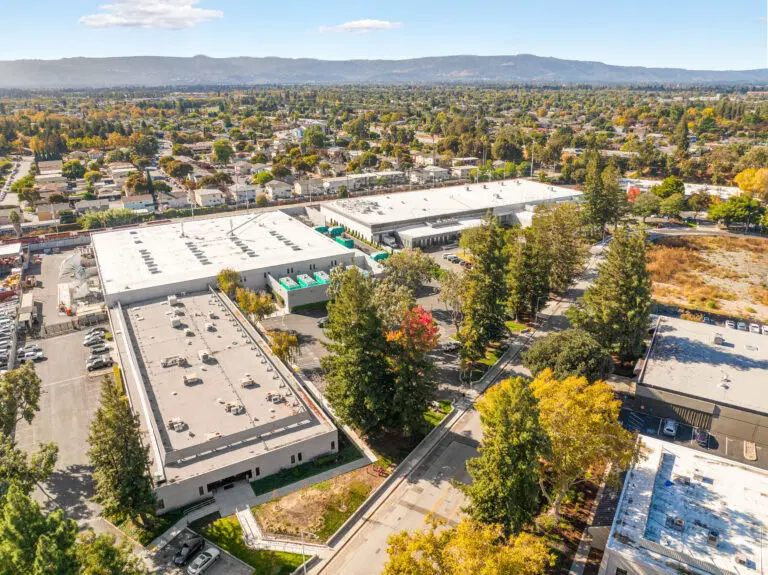
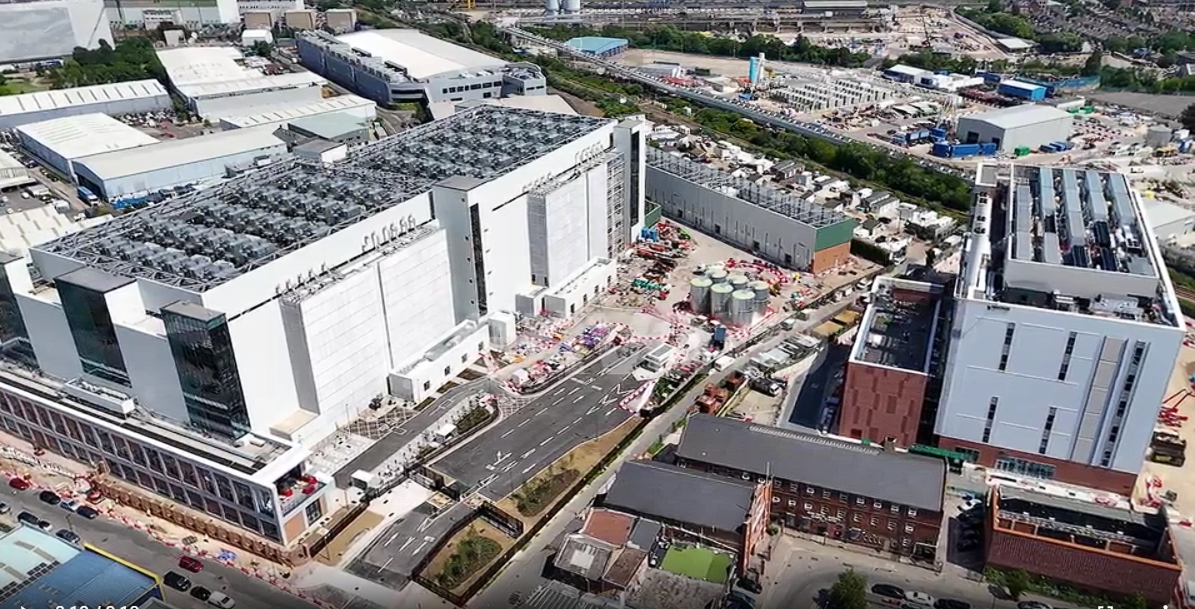
Data centres are becoming larger as computing capacity expands and AI finds new applications. They need land not only for server buildings, but also for supporting infrastructure including electrical substations, transformers, backup power systems, cooling equipment and, where required, water treatment and storage facilities.
The rapid growth of the AI infrastructure economy also makes it important for future expansion. The site’s size therefore depends on the scale of the proposed data centre, infrastructure and investment required to develop the facility. A large parcel may offer room for a substantial facility and future expansion, but the cost of providing missing infrastructure can outweigh the advantages of its size.
Beyond The Buildings
Land described as vacant, barren or underused may still support grazing, cultivation, local livelihoods or ecological functions. Agricultural land can be productive even when it is not intensively cultivated. Its apparent availability does not necessarily mean that converting it to another use will not have any consequences. The practical question is not simply how much land is available. What that land can support is as important as what must be done to make development possible.
The Importance of Location
Uninterrupted power supply is a central consideration in choosing a site. Water and the cooling system too matter. Fibre networks and international connectivity influence where a facility can serve its users, as much as road access and time needed to commission the project.
India’s emerging AI infrastructure is also facing similar pressures. Reliance’s proposed AI data centre at Jamnagar, Gujarat, combines data-centre development with plans for renewable-energy supply and water infrastructure. The project highlights how the suitability of a location depends on more than the availability of land. The price of the land alone, therefore, does not reveal the cost of developing the site.
What About Coastal Locations?
Coastal sites present another set of possibilities owing to their proximity to subsea cable landing stations. The Google–Adani AI hub at Visakhapatnam is a classic example as it envisages a new international subsea gateway, with multiple cables landing on India’s eastern coast.
Proximity to the sea does not automatically qualify a site for a data centre. Access to seawater for desalination is also a possibility wherever it is technically and environmentally feasible. Desalination, however, requires dedicated facilities, energy and pipelines, as well as arrangements for managing the resulting brine. Sensitive habitats and competing demands on the shoreline can also pose challenges. The question is not simply how much land a data centre needs, but how much of the right land is available in a location that can support it.
New Use For Old Industrial Land
Changes in technology and manufacturing methods have rendered some industrial facilities redundant. Rather than automatically seeking new land, data-centre developers are examining whether former factories, manufacturing complexes and retired power stations can be repurposed.
Reusing these sites has advantages through existing power connections, roads, industrial zoning and other infrastructure. In a way, it reduces the pressure on agricultural land or other undeveloped parcels. In Forest City, North Carolina, Meta redeveloped a former industrial site for a data centre.
However, an industrial past does not guarantee suitability for repurposing. Older facilities may not meet the requirements of a modern data centre. Promoters considering redevelopment must examine the condition of the site, the available infrastructure and the cost.