
The AI Infrastructure Economy
The Hidden Input – Part 1
Editor’s Note
As India races to build AI infrastructure, the competition is extending beyond chips and data centres. Water is emerging as a strategic resource that could influence where AI infrastructure is built, how it is cooled, and which states are best placed to host the next generation of digital infrastructure.
This article is the first part of AfroAsian News’ enquiry into the hidden inputs of the AI Infrastructure Economy. It is accompanied by a decoder on why data centres consume water and how their cooling systems work.
For much of the past decade, debates about artificial intelligence have centred on algorithms, large language models, GPUs and computing power.
These have been central to the AI narrative. Yet they don’t tell the complete story.
Artificial intelligence has already become an infrastructure story. But, it is being told in fragments.
Individually, they appear to belong to different sectors. Taken together, they point to a major shift in the economics of artificial intelligence.
The global AI race is no longer all about software, chips or models. It is also about the physical infrastructure that supports them.
A recent report of the World Resources Institute (WRI) gives an indication of how this is changing.
According to WRI, more than half of India’s data centres are located in water-stressed regions, while nearly three-quarters are concentrated across just five states—Maharashtra, Tamil Nadu, Karnataka, Telangana and Uttar Pradesh.
As India prepares for the next wave of AI-driven data centre investments, the findings raise a rarely debated question: can access to water influence where AI infrastructure is built?
At first glance, the answer appears to be an environmental issue. In reality, it is rapidly becoming an infrastructure and economic question.
Water and the geography of AI
Every hyperscale data centre produces enormous amounts of heat. It requires sophisticated cooling systems and substantial quantities of water to manage the heat.
As AI workloads intensify and data centres grow in both scale and density, water availability is likely to affect operations, long-term project viability and investment planning. It is also changing the geography of AI infrastructure.
Today’s AI race is about infrastructure.
Until recently, data centre locations were largely determined by electricity availability, digital connectivity, land availability and proximity to users.
The WRI findings indicate that regions able to secure enough water—through natural sources, recycling or other means—could have an advantage as AI infrastructure expands.
This is where India’s coastline becomes strategically significant, as coastal states have several options such as desalination, treated wastewater reuse and new cooling technologies to reduce pressure on freshwater resources.
This is something that many inland regions cannot offer. All these are high-cost options, but they make more locations viable for large data centres.
The issue has led to local resistance. In water-stressed regions, whether in the US or India, local communities have expressed concern about water shortages caused by data centres.
AI infrastructure will also have to factor these concerns into investment plans.
Andhra Pradesh
In Andhra Pradesh, Google is building a gigawatt-scale AI hub in Visakhapatnam as part of its $15 billion investment in India.
The project includes a large data-centre campus, new power infrastructure, energy storage and an international subsea cable gateway.
The State has also allocated Reliance nearly 855 acres for a giga-scale AI data centre and cable landing station, with a proposed investment of ₹1.08 lakh crore.
Grid infrastructure and a desalination plant are also part of the project to meet its long-term water needs.
Interestingly, each project has been announced independently. Whether by chance, conscious policy or through multiple investments, Andhra Pradesh appears to be laying the basic foundation for large-scale AI infrastructure.
The State’s coastline, availability of industrial land, development of power infrastructure and long-term water prospects indicate that data centres are not isolated affairs.
It would be premature to assert that this is a full-fledged AI infrastructure strategy.
However, it does raise an important question: will the states that lead the AI economy necessarily be those offering the largest financial incentives?
Or will they be the ones capable of providing the infrastructure that advanced AI requires?
Much will depend on their ability to provide the basic infrastructure that AI requires.
Beyond software and semiconductors
This shift towards infrastructure also affects sectors beyond software and semiconductor manufacturing.
Water management companies, cooling technology providers, electrical equipment manufacturers, engineering firms, infrastructure developers, utilities and industrial service providers all stand to benefit.
The WRI report goes beyond environmental concerns. It indicates that these factors can influence investment decisions, but they have yet to enter public debate.
As governments compete for AI investments, fiscal incentives alone will not be sufficient. Much will depend on their ability to provide the basic infrastructure that AI requires.
Water is one of those. Its strategic importance indicates that the global AI race may also be a competition for infrastructure itself.
Decoding The Hidden inputs
Why Do Data Centres Consume So Much Water
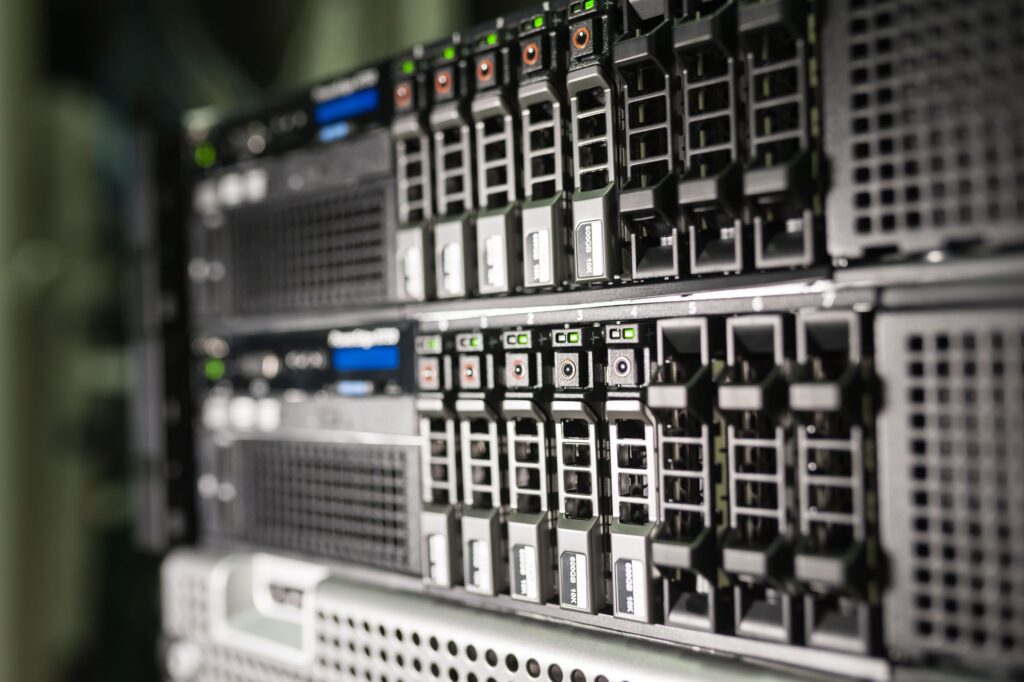
Artificial intelligence may look entirely digital, but it runs on machines that generate enormous amounts of heat.
Keeping those machines cool is a major engineering challenge—and one that brings water to the centre stage of discussions.
When people think about artificial intelligence, it is usually about algorithms, software and powerful computer chips. Few associate AI with water.
Yet modern data centres—the facilities that house thousands of servers powering cloud computing and artificial intelligence—often depend on water as part of their cooling systems.
The reason is simple. Servers require electricity to process data. Much of that electricity is converted into heat.
If the heat is not removed, it affects equipment performance. The hardware ages faster and systems become unreliable.
Cooling, therefore, is not optional for a data centre—it is a core engineering requirement.
Heat is the real challenge
Data centres have always produced heat. What has changed is the scale.
Training and running today’s large AI models require tens of thousands of high-performance graphics processing units (GPUs) operating simultaneously.
These processors guzzle electricity and generate far more heat than traditional computing hardware.
As AI workloads become larger and more complex, evacuation of heat becomes very difficult.
Air cooling: the traditional approach
Conventional data centres use specialised air-conditioning systems to circulate chilled air through server rooms.
This approach has stood the test of time. However, powerful AI servers, deployed in the existing space, generate more heat than traditional air-cooling systems can handle.
Cooling the source of the heat
Many next-generation AI facilities are adopting liquid cooling technologies instead of relying only on chilled air.
The special cooling liquids absorb heat directly from processors and evacuate it much more efficiently than air.
This improves AI hardware performance even while reducing the energy required for cooling.
Only some of the water used by a data centre comes into contact with equipment.
In many facilities, water is used within the cooling system, such as in a cooling tower.
The warm water is sent to a cooling tower, where some of it evaporates and carries the heat away. The cooled water is then returned to the system and used again.
Because some water is lost through evaporation, fresh water must periodically be added to maintain the cooling cycle.
Consumption vs withdrawal
These two terms are often used interchangeably, but they describe different things.
Water withdrawal is the total amount of water taken from a source such as a river, reservoir or municipal supply. Much of this water may later be returned.
Water consumption refers to that portion which evaporates.
Understanding this distinction is important when assessing data centre water consumption.
Does AI change the equation?
Larger AI models require more computing power, more servers and higher-density facilities. That, in turn, increases the demand for cooling.
Liquid cooling has improved efficiency, but the rapid expansion of AI infrastructure has thrown the spotlight on how cooling systems use both energy and water.
Can water use be reduced?
The industry is actively exploring ways to reduce dependence on freshwater.
These include greater adoption of liquid cooling, using treated wastewater instead of potable water, recycling cooling water, exploring seawater-based cooling where geography permits, improving cooling tower efficiency, and locating facilities in climates where natural cooling reduces demand.
The takeaway
Cooling systems are among the least visible parts of a data centre, yet they are essential to its operation.
As AI infrastructure continues to expand, understanding how data centres manage heat provides useful context for water use, energy efficiency and the future growth of artificial intelligence.