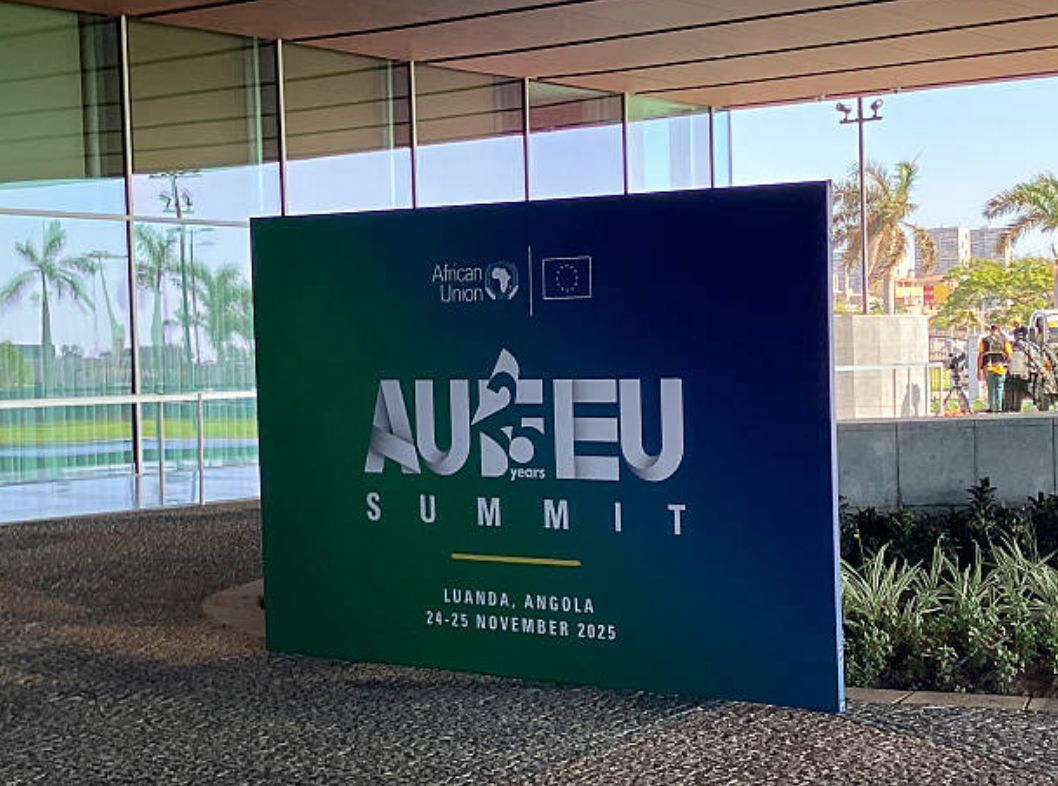
Under the banner of a “renewed partnership,” the European Union has arrived at the 7th AU-EU Summit with a €150 billion promise. The question echoing through the halls in Brussels and across the continent is whether this massive investment package represents a genuine gateway to a shared future or a carefully guarded gate preserving old imbalances.
The centerpiece of the summit, the EU’s “Global Gateway” Africa-Europe Investment Package, is being pitched by European leaders as a transparent alternative to other foreign initiatives. But African leaders, civil society, and business figures are approaching it with a clear-eyed focus on tangible benefits and respect for African sovereignty.
The narrative of partnership must be matched by practice. For us, the metrics of success are clear: technology transfer, local value addition, and decision-making power. This cannot be another program designed in European capitals for Africa. It must be crafted with Africa.
The summit revealed a unified African front on several non-negotiable priorities. In the wake of the painful vaccine inequity of the COVID-19 pandemic, the AU’s demand for medical self-sufficiency was a dominant theme. The EU’s commitment to support the goal of Africa producing 60% of its own vaccines by 2040 was seen as a direct, if overdue, response to Africa’s call for pharmaceutical sovereignty. With the continent bearing the brunt of a climate crisis it did not create, the focus was squarely on a just energy transition.

European Council President António Costa (left) and Angolan President João Lourenço, in his capacity as Chairperson of the African Union, address the media following the conclusion of the first day of the AU-EU Summit. The event took place at the Salão Protocolar in Luanda on November 24, 2025.
African leaders emphasized harnessing the continent’s vast solar, wind, and geothermal potential not only for green energy, but also for industrialization, so we will not be forced to choose between poverty and pollution. The world’s clean energy future depends on Africa’s minerals and our people must benefit from those value chains.
Outside the main plenary, the authentic pulse of the partnership was felt at the parallel forums. At the Business Forum, African entrepreneurs and investors were clear. The €150 billion is welcome, but the structure is everything. We need to move beyond raw material exports. Investment must target African SMEs, foster local manufacturing, and build Pan-African supply chains. The capital must be accessible, not lost in bureaucracy.
Meanwhile, the Civil Society and Youth Forum served as the partnership’s moral compass, their message unequivocal: “Nothing About Us Without Us.” They demanded climate reparations, not just loans, holding historical polluters in the Global North accountable. They called for an end to illicit financial flows and condemned the “Fortress Europe” migration regime, demanding the right to movement and that the root causes of forced migration—many of which lie in global economic policies—be addressed.
The sectors targeted for investment ultimately reflect Africa’s own developmental ambitions as outlined in the AU’s Agenda 2063. The focus is on digitalization to power the continent’s thriving innovation ecosystem, green energy to industrialize using its own resources, agribusiness to achieve food sovereignty, and health manufacturing to ensure security. The verdict on this “renewed partnership” remains suspended. The €150 billion is a significant number, but for Africa, the true measure of success lies not in the pledge made in Europe, but in the prosperity, sovereignty, and opportunity it generates for African people on African soil. The gate is open and the path forward must be built together, as true equals.